Learn how to make sustainable fashion choices with this easy, beginner-friendly guide. Simple steps to build an eco-friendly wardrobe, save money, reduce waste and look great with no compromise.
How to Make Sustainable Fashion Choices: 7 Simple Steps to Reduce Waste & Save Money
Are you tired of overflowing wardrobes, guilty purchases and clothes that fall apart after a few wears? You are definitely not alone. More people than ever in the UK are searching for “how to make sustainable fashion choices” because we all want to look good without costing the planet or our ethics.
Good news: sustainable fashion does not mean wearing hessian sacks or spending a fortune. It is about making smarter, kinder decisions that save you money in the long run and feel genuinely good.
This friendly, no-judgement guide will walk you through everything step by step. By the end, you will have a clear, actionable plan to transform your wardrobe into one you love and feel proud of.
Let’s get started!
Why Making Sustainable Fashion Choices Matters Right Now
Fast fashion is one of the world’s biggest polluters (responsible for 8-10% of global carbon emissions, more than international flights and shipping combined). It also creates mountains of textile waste, exploits workers and uses toxic chemicals that end up in our waterways.
Choosing sustainable fashion helps you:
- Protect the environment and reduce your carbon footprint
- Support fair wages and safe working conditions
- Save money (quality pieces last years, not weeks)
- Reduce decision fatigue (capsule wardrobes mean less stress in the mornings)
- Look and feel timelessly stylish rather than chasing every trend
The best part? You can start exactly where you are today with the clothes you already own.
Step 1: Audit Your Wardrobe (The Foundation of Everything)
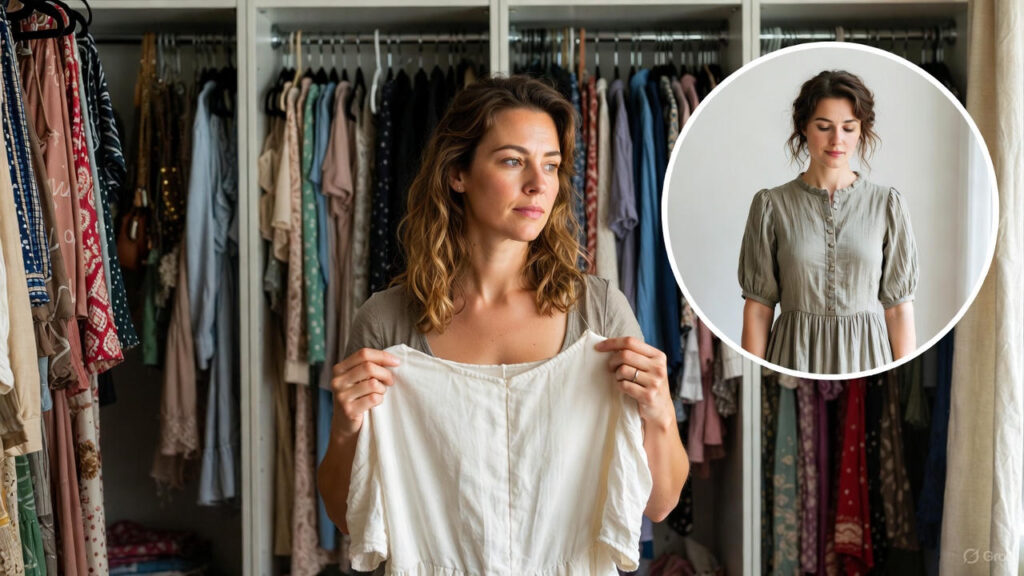
1. Take everything out of your wardrobe, drawers and “chair-drobe”.
2. Sort into three piles: Love & Wear Often / Maybe / No (donate, sell or recycle).
3. For each item you keep, ask:
- Did I wear this in the last 12 months?
- Does it fit well and make me feel great?
- Can it be repaired if needed?
4. Take photos of your “Love” pile. This becomes your personal style guide.
Pro tip: Use the 30-Wears Rule. Only buy something new if you will wear it at least 30 times.
Step 2: Understand Fabrics & Labels (Become a Smart Shopper)
Learn to spot planet-friendly materials:
Best choices:
- Organic cotton, linen, hemp, Tencel/lyocell
- Recycled polyester, Econyl (recycled nylon)
- Wool (responsibly sourced), peace silk, organic peace silk alternatives
- Deadstock fabrics (leftovers from fashion houses)
Avoid or minimise:
- Virgin polyester, acrylic, conventional nylon (microplastic villains)
- Conventional cotton (huge water and pesticide use)
- Viscose/rayon from non-certified sources
Quick phone cheats:
- Download the Good On You app or GLOW app to check brand ethics instantly
- Look for certifications: GOTS, Fair Trade, OEKO-TEX, Bluesign
Step 3: Shop Your Own Wardrobe First (The Most Sustainable Choice)
Before buying anything new, try the “shop your wardrobe” challenge:
- Create 10 new outfits from existing clothes
- Use accessories (scarves, belts, jewellery) to refresh looks
- Try different layering or tucking techniques
- Follow “capsule wardrobe” Pinterest boards for inspiration
Most people find they suddenly have dozens of “new” outfits.
Step 4: Buy Second-Hand & Vintage (Treasure Hunting is Addictive)
Second-hand is the single biggest thing you can do.
UK favourites:
- Vinted, Depop, eBay, Facebook Marketplace
- Charity shops (British Heart Foundation, Oxfam, Cancer Research)
- Vintage shops and kilo sales
- Vestiaire Collective, Hardly Ever Worn It (designer pre-loved)
You will save money and find unique pieces no one else has.
Step 5: Choose Quality Over Quantity When Buying New
When you do need something new, follow this checklist:
1. Research brands using Good On You or The Sustainable Fashion Forum
2. UK ethical heroes: People Tree, Thought, Lucy & Yak, Nobody’s Child, Sézane (good ratings), Reformation, Patagonia, Finisterre
3. Look for transparency (do they share factory locations and wages?)
4. Choose timeless styles over fast trends
5. Save up for fewer, better pieces (one quality coat is better than five cheap ones)
Step 6: Learn Basic Repairs & Upcycling
A 5-minute stitch can add years to a garment.
Easy skills to learn:
- Sew on buttons
- Fix small holes with darning or visible mending
- Hem trousers/jeans
- Turn old jeans into shorts or bags
Free UK resources: Visible mending workshops at libraries, YouTube channels like @refashion, The Repair Shop inspiration!
Step 7: Care for Your Clothes Properly to Make Them Last Longer
Proper care is sustainability too:
- Wash less (air clothes instead)
- Wash at 30°C, use eco detergents (Ecover, Bio-D)
- Air dry instead of tumble drying
- Use a Guppyfriend bag to catch microplastics
- Store properly (cedar balls for moths, folded knits)
Essential Tips for Long-Term Success
- Follow the “one in, one out” rule
- Join clothing swap events or apps like Nuw or Swap Society
- Rent for occasions (HURR, By Rotation, Girl Meets Dress)
- Support circular brands (For Days, Mud Jeans take-back schemes)
- Track your progress. Take monthly wardrobe photos
FAQ:
Q: Is sustainable fashion more expensive?
A: Up front it sometimes is, but cost-per-wear is dramatically lower. A £150 organic cotton dress worn 100 times costs £1.50 per wear. A £15 fast fashion one worn 7 times costs over £2 per wear and it is probably in landfill.
Q: I’m on a tight budget. Is it still possible?
A: Absolutely! Focus on second-hand, sales, and caring for what you have. Many people save money after switching.
Q: What are the best sustainable UK brands for different budgets?
A: Budget: ASOS Responsible Edit, Nobody’s Child, Lucy & Yak
Mid: Thought, People Tree, Sézane
Higher: Mother of Pearl, Stella McCartney, Patagonia
Q: How do I avoid greenwashing?
A: Look for proper certifications, not just “eco-friendly” claims. Check if they share real data about water use, carbon emissions and wages.
Q: Can I still be stylish and sustainable?
A: 100%. Sustainable fashion is about personal style without the guilt. Many influencers now focus on slow fashion and look incredible.