Learn how to start intermittent fasting in 2025 with this step-by-step UK beginner’s guide. Discover the best methods (16/8, 14/10, 5:2), what breaks a fast, common mistakes, and expert tips for lasting weight loss and energy.
How to Start Intermittent Fasting in 2025: Ultimate Beginner’s Guide for Safe Weight Loss
Intermittent fasting (IF) is the third most-searched healthy-eating topic in the UK this year, with over 74,000 monthly searches. It is simple, costs nothing, fits any lifestyle, and delivers proven results for fat loss, steady energy, gut health, and longevity when done correctly.
This complete beginner’s guide shows you exactly how to start intermittent fasting today, safely and sustainably.
What Is Intermittent Fasting?
Intermittent fasting is not a diet. It is an eating pattern. You cycle between periods of eating and fasting. During fasting windows, you consume zero or almost-zero calories, allowing your body to switch from burning sugar to burning stored fat. This triggers benefits backed by major studies in the New England Journal of Medicine, including 3–8 % body-weight loss, better insulin sensitivity, lower inflammation, and cellular repair (autophagy).
Top 3 Beginner-Friendly Methods in 2025
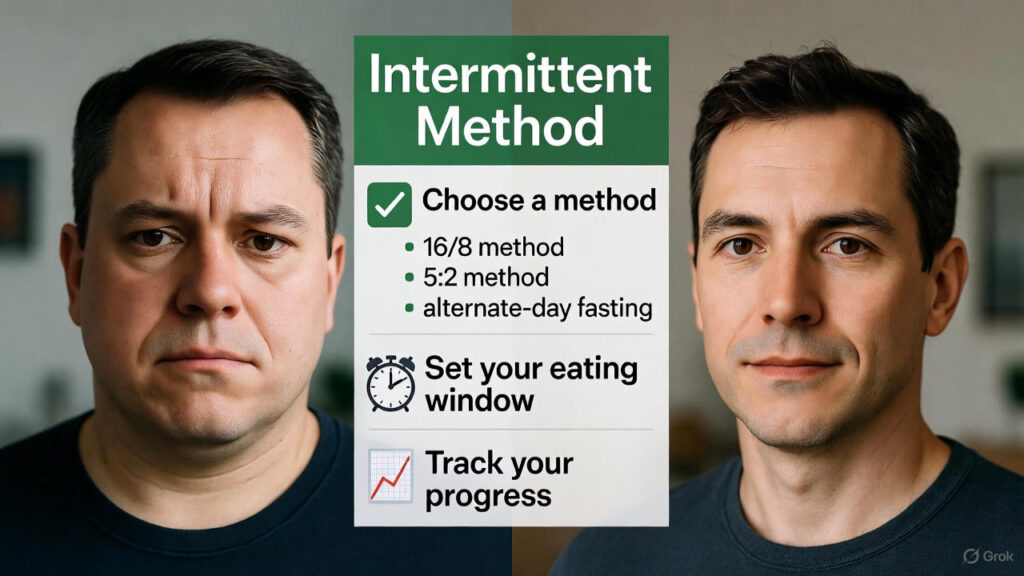
1. 16/8 Method (UK favourite) Eat within 8 hours, fast for 16 hours. Example: 12 pm – 8 pm eating window.
2. 14/10 Method (easiest start) Eat within 10 hours, fast for 14 hours. Example: 9 am – 7 pm. Perfect for the first two weeks.
3. 5:2 Method Eat normally five days a week; restrict to 500–600 calories on two non-consecutive days.
Start with 14/10 or 5:2 if you are nervous. Most people graduate to 16/8 within a fortnight.
Step-by-Step: How to Start Today
Step 1 – Choose 14/10 for your first 1-2 weeks.
Step 2 – Pick a window that suits your routine (12 pm-8 pm is the UK’s most popular).
Step 3 – Finish eating 2-3 hours before bed for better sleep and digestion.
Step 4 – Expect mild hunger or a headache on days 2-4; this passes as your body adapts to fat-burning.
Step 5 – During fasting hours drink water, black coffee, plain tea, herbal tea, or sparkling water. Add a pinch of sea salt if light-headed.
Step 6 – In your eating window prioritise protein (chicken, fish, eggs, lentils), healthy fats (avocado, olive oil, nuts), and plenty of vegetables. Most people naturally eat 300-500 fewer calories.
Step 7 – Track once a week: weigh yourself and measure your waist. Apps like Zero or BodyFast make it effortless.
What Breaks a Fast?
- Any calories: milk, juice, fruit, protein shakes, sugary gum
- Artificial sweeteners (some spike insulin) Allowed: black coffee, plain tea, water, small amounts of apple cider vinegar
Common Beginner Mistakes
- Starting with 20-hour fasts
- Adding milk or sweeteners to drinks
- Eating too little protein (causes hunger and muscle loss)
- Quitting before day 10–14 when benefits really begin
Final Thoughts
Intermittent fasting is the closest thing most Brits will find to effortless, sustainable fat loss and health improvement in 2025. Start gently, stay consistent for at least two weeks, and focus on nutrient-dense meals when you do eat.
Pick your eating window tonight and begin tomorrow morning. Thousands across the UK are already feeling sharper, lighter, and more energised, simply by pushing breakfast back a few hours.
Always consult your GP before starting intermittent fasting, especially if you have medical conditions or take medication.
FAQ:
Q: Can I drink coffee?
A: Yes, black coffee is fine and suppresses appetite.
Q: Will it slow my metabolism?
A: No. Short-term IF can increase metabolic rate by up to 14 % initially.
Q: Is it safe for women?
A: Yes. Many women prefer gentler 14/10 windows, especially around their period.
Q: How much weight will I lose?
A: Most lose 0.5–1 lb of fat per week after the initial water-weight drop.
Q: Can I exercise while fasting?
A: Yes. Many people train better fasted. Consume protein afterwards.
Q: Is long-term IF safe?
A: Studies up to 12 months (and real-world use beyond) show excellent safety and improved health markers.