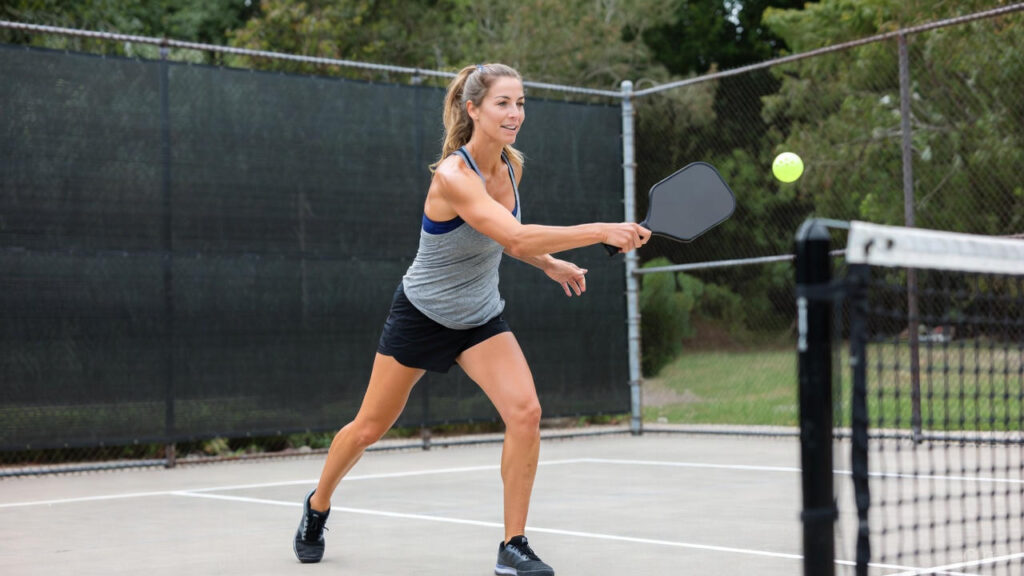
Want to learn how to play pickleball for beginners in the UK? This easy guide covers rules, equipment, and step-by-step tips so you can start playing today!
How to Play Pickleball for Beginners
Curious about the sport everyone is talking about? If you are wondering how to play pickleball for beginners in the UK, you have landed in exactly the right place. Pickleball combines elements of tennis, badminton, and table tennis to create a fun, social game that is easy to pick up and perfect for all ages. Courts are appearing in parks, leisure centres, and clubs across the country, so it has never been simpler to give it a go. In this friendly guide we will take you through everything you need to know to get started. Let us dive in!
Why Pickleball is Brilliant for UK Beginners
Pickleball started in the USA in the 1960s but has grown rapidly here since 2020. It is low-impact, sociable, and does not demand super-human fitness, making it ideal for families, older adults, and anyone wanting gentle exercise. Games are quick, laughter is guaranteed, and the UK pickleball community is incredibly welcoming. Plus, you can play indoors or outdoors, perfect for our unpredictable weather.
What Equipment Do You Need?
You do not need much to start, and most of it is affordable.
- Paddle – Choose a beginner-friendly composite or graphite paddle (200-250g). Expect to pay £25-£60 from Decathlon, Amazon, or Pickleball England’s shop.
- Balls – Perforated plastic pickleballs. Indoor balls have larger holes; outdoor balls are slightly heavier. A pack of six costs around £10.
- Net – Portable nets start at £50 and set up in minutes on any flat surface.
- Court – The court is the same size as a badminton court (6.1m x 13.4m). Many tennis centres have lines taped on, or you can use chalk for temporary courts.
- Clothing – Comfortable sportswear and non-marking trainers with good grip.
Starter sets are widely available and great value
Step-by-Step: How to Play Pickleball for Beginners in the UK
Step 1: Learn the Court Layout
A net stands 91cm high at the sides and 86cm in the middle. The 2.1m area on each side of the net is the “kitchen” or non-volley zone.
Step 2: Decide Singles or Doubles
Doubles is recommended for beginners because it is more forgiving and twice the fun.
Step 3: Serve Correctly
Stand behind the baseline. Serve underarm, below waist height, with an upward motion. The ball must land in the diagonal service box and clear the kitchen. Only one serve attempt (except for lets).
Step 4: Follow the Double-Bounce Rule
After the serve, the receiving team must let the ball bounce once before returning it. The serving team must then let that return bounce once. After these two bounces, you can volley or play off the bounce.
Step 5: Respect the Kitchen
You cannot volley while standing in the kitchen. You may enter it only after the ball has bounced.
Step 6: Keep Score
Only the serving side can score points. Games are usually to 11, win by 2. Call the score as server score – receiver score – server number (1 or 2).
Step 7: Rotate Service
In doubles, when you win a point your partner serves next from the other side. When you lose the serve, the opponents take over.
Practise these basics and you will be rallying in no time.
Extra Tips to Speed Up Your Progress
- Master the soft “dink” shot to keep opponents guessing.
- Communicate with your partner – shout “mine” or “yours”.
- Find local sessions via the Pickleball England “Where to Play” map.
- Bring layers – British weather is unpredictable!
Learning how to play pickleball for beginners in the UK is straightforward, affordable, and enormous fun. Grab a paddle, find a court, and give it a try this weekend. You will wonder why you waited so long!
FAQ: Your Pickleball Questions Answered
Q: Where can I play pickleball near me?
A: Use the Pickleball England court finder or the LTA website. New venues open weekly.
Q: How long does a typical game last?
A: Around 15-25 minutes, perfect for a quick session.
Q: Is pickleball suitable for children?
A: Yes! Smaller paddles are available and kids love it.
Q: Do I need to be very fit?
A: Not at all. It is low-impact and you control the pace.
Q: What if I get the rules wrong at first?
A: Everyone does! The community is friendly and will happily help.