Discover how to do calligraphy in 10 easy steps with this beginner-friendly guide. Create elegant, personalised calligraphy pieces at home for artistic satisfaction and unique gifts.
How to Do Calligraphy with Confidence
If you wish to learn how to do calligraphy, you have come to the right place. Mastering how to do calligraphy is a delightful and rewarding pursuit that fosters creativity and precision. With this comprehensive guide, you can discover how to do calligraphy through simple techniques suitable for beginners. In just 10 easy steps, you will produce elegant calligraphy pieces that enhance your personal projects or serve as thoughtful gifts. Learning how to do calligraphy offers a calming way to express artistry. No prior experience is required, but patience is key. Safety note: ensure a clean workspace and handle inks carefully to avoid stains. Ready to embark on learning calligraphy? Let us proceed with enthusiasm.
What You’ll Need to Do Calligraphy
To commence learning how to do calligraphy, assemble these essential items. This selection is ideal for a basic modern calligraphy project, such as scripting a quote.
- Calligraphy pen holder (oblique or straight, depending on style)
- Nibs (flexible ones like Nikko G for beginners)
- Ink (sumi or gouache for smooth flow)
- Practice paper (smooth, bleed-proof sheets like Rhodia pads)
- Guide sheets (with slant lines for consistency)
- Water jar and cloth for cleaning
- Pencil and eraser for sketching
- Optional: Watercolours or metallic inks for added flair
These materials are readily available from art suppliers or online. With an initial investment of approximately £20-30. Choose high-quality supplies to make your calligraphy journey easier.
10 Easy Step-by-Step Instructions: How to Do Calligraphy
Follow these 10 steps to learn how to do calligraphy effectively. We focus on dip pen calligraphy, which takes about 30-60 minutes per session, plus practise time.
Step 1: Prepare your workspace
Arrange a flat, well-lit surface covered with protective paper. Good posture aids in how to do calligraphy smoothly.
Step 2: Assemble your pen
Insert the nib into the holder securely. Clean new nibs with alcohol to remove oils.
Step 3: Dip the nib
Submerge halfway into ink, avoiding the centre hole. Shake off excess for controlled flow.
Step 4: Understand basic strokes
Practise upstrokes (light pressure for thin lines) and downstrokes (firm pressure for thick lines). This foundation is crucial in calligraphy.
Step 5: Use guide sheets
Place under your paper to maintain consistent slant and height. Trace lines to build muscle memory.
Step 6: Form lowercase letters
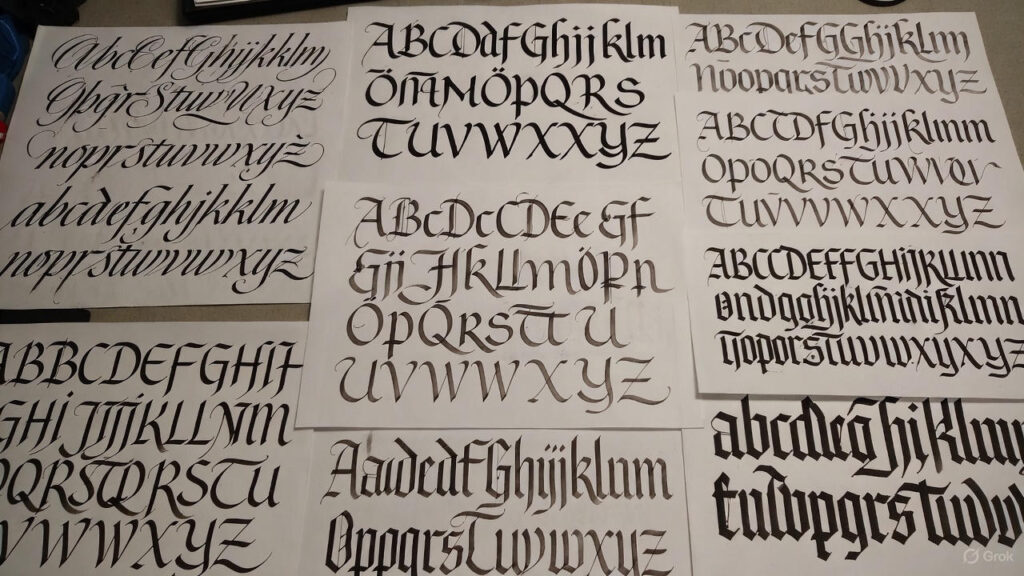
Start with simple ones like ‘a’ and ‘o’. Connect strokes fluidly for elegant calligraphy.
Step 7: Practise uppercase letters
Move to capitals, focusing on flourishes for added sophistication in calligraphy.
Step 8: Connect letters
Write words by linking letters smoothly. Adjust spacing for balanced composition.
Step 9: Add flourishes
Embellish with swirls or extensions once comfortable. Experiment to personalise your style.
Step 10: Finish and preserve
Allow ink to dry fully. Scan or frame your work to enjoy your progress in calligraphy.
These steps make learning calligraphy accessible and enjoyable. Begin with faux calligraphy using markers if dip pens seem daunting, then advance.
Tips for Elegant Calligraphy
- Maintain consistent pressure: Light up, heavy down, for dynamic lines.
- Practise daily: Short sessions build skill in learning how to do calligraphy.
- Clean tools regularly: Rinse nibs after use to prevent clogging.
- Experiment with styles: Try copperplate or brush lettering for variety.
- If ink bleeds, switch to smoother paper.
- Join online communities for inspiration and feedback on how to do calligraphy.
- Store inks in a cool, dark place to preserve quality.
There you have it. Now you understand how to do calligraphy in 10 easy steps. This enriching activity yields elegant results with dedication. Begin today and delight in your creations.
FAQ: Common Questions About How to Do Calligraphy
Q: How long does it take to learn how to do calligraphy?
A: Basic proficiency comes with 10-20 hours of practise, but mastery evolves over time.
Q: Can I do calligraphy with regular pens?
A: Yes, brush pens are excellent for beginners in how to do calligraphy.
Q: What if my lines are shaky?
A: Relax your grip and practise slow strokes to steady your hand.
Q: Is calligraphy suitable for left-handers?
A: Absolutely, with oblique holders adjusted for left-handed use in calligraphy.
Q: How do I fix mistakes?
A: Use correction fluid or embrace imperfections as part of the art.
External_links:
cribblers Calligraphy → Extensive range of pointed nibs including Nikko G, Zebra G, and Brause: https://scribblers.co.uk/collections/nibs-dip-pens
Calligraphy Arts UK → High-quality Italian and vintage-style nibs: https://calligraphyartsuk.com/en-gb/54-nibs-holders-reservoirs