
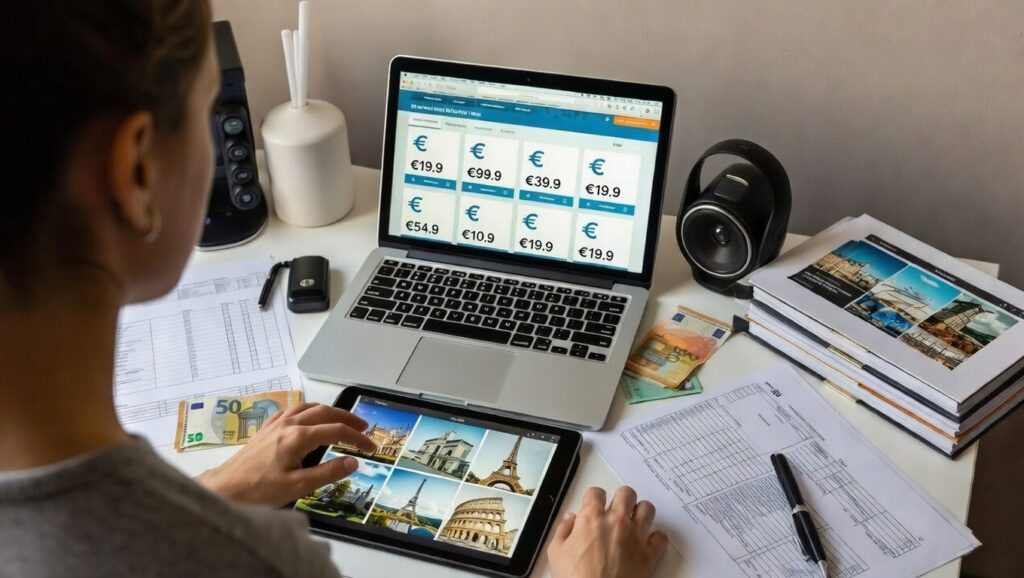
Learn how to plan a Europe trip with these 10 essential steps. From choosing destinations and best time to visit to budget, itinerary, and packing, this complete guide helps first-time travelers create a smooth and enjoyable journey.
How to Plan a Europe Trip
Planning a Europe trip rank among the most exciting travel experiences, yet it often feels overwhelming with 44 countries, countless cities, and endless possibilities. Whether this is your first visit or a return journey, a clear plan saves money, reduces stress, and helps you enjoy every moment.
This practical guide walks you through 10 essential steps to plan a Europe trip successfully. Follow them in order to build a realistic and enjoyable itinerary that matches your budget, interests, and available time.
1. Decide Your Trip Length and Season
First decision: How many days can you take off?
- Short trip (7 to 10 days): Focus on 1 to 3 cities or one region (for example Paris and Normandy, or Rome, Florence, and Tuscany).
- Medium trip (14 to 18 days): Comfortable for 4 to 6 cities or 2 countries.
- Long trip (21+ days): Allows deeper exploration or multi-country routes (for example Central Europe or Scandinavia).
Best months:
- May & September — shoulder season sweet spot: mild weather, fewer crowds, lower prices.
- June–August — peak season: warmest, longest days, but highest prices and crowds.
- October–April — off-season bargains, but shorter days and colder/rainier weather.
Tip: Avoid Easter, Christmas markets, and major festivals unless you want the crowds.
2. Choose Your Core Destinations (The 80/20 Rule)
Pick 2–4 main cities/regions — trying to “see everything” ruins most first trips.
Popular first-timer combinations:
- Classic: Paris → Amsterdam → Berlin
- Romance: Paris → Venice → Florence → Rome
- Culture: London → Edinburgh → Dublin
- Food & Wine: Barcelona → Madrid → Lisbon
- Nature + Cities: Munich → Salzburg → Vienna → Prague
Reminder: Travel time between cities matters. Use trains (Eurail/Interrail pass) for Central/Northern Europe, budget flights (Ryanair, easyJet, Wizz Air) for longer jumps.
3. Set a Realistic Budget Early
Europe costs vary dramatically by country and travel style.
Rough daily budgets per person (mid-range):
- Budget: €70–110/day (hostels, street food, public transport)
- Mid-range: €120–200/day (private room/Airbnb, restaurants, some attractions)
- Comfort: €220+/day (hotels, nicer dining, tours)
Biggest expenses:
- Flights to Europe (€400–900 round-trip from US/Canada)
- Accommodation (40–50% of budget)
- Inter-city transport
- Food & attractions
Tip: Use budgeting apps like Trail Wallet or Splitwise from day 1.
4. Book Flights & Major Transport First
Cheapest strategy:
- Book international flights 3–6 months out (use Google Flights + Skyscanner alerts)
- Consider open-jaw tickets (fly into one city, out of another)
- Book trains 2–4 months ahead for best prices (especially high-speed like TGV, ICE, Eurostar)
Reminder: Budget airlines charge for everything — read baggage rules carefully.
5. Build a Flexible Itinerary (The 3-Night Rule)
Golden rule for first-timers: Spend at least 3 nights in each major city.
Sample 14-day itinerary:
- Days 1–4: Paris
- Days 5–7: Brussels + Bruges (day trip)
- Days 8–11: Amsterdam
- Days 12–14: Berlin
Tip: Build in 1–2 “rest” or buffer days for jet lag, delays, or spontaneous plans.
6. Choose Accommodation Strategically
Best locations: Central but not tourist-trap expensive (e.g. Le Marais in Paris, Jordaan in Amsterdam, Kreuzberg in Berlin).
Options ranked by cost:
- Hostels → €25–60/night
- Airbnb/private room → €60–140/night
- Mid-range hotels → €100–220/night
- Boutique/apartments → €150–300+/night
Reminder: Book cancellable rates first, then finalize 2–3 months out when plans solidify.
7. Get Travel Insurance & Check Visas/Passports
Non-negotiable:
- Travel insurance covering medical, trip cancellation, lost luggage (minimum €30,000 medical)
- Passport valid 6 months beyond departure date
- ETIAS authorization (€7, required for visa-exempt travelers)
Tip: Print digital insurance policy and save offline.
8. Plan Money & Cards Wisely
Reality:
- Contactless & mobile payments (Apple Pay, Google Pay) accepted almost everywhere
- Still carry some cash (small towns, markets, tips)
- Use fee-free cards (Revolut, Wise, N26, Schwab)
Reminder: Notify your bank of travel dates to avoid card blocks.
9. Pack Smart & Light (Carry-On Only)
Europe packing list essentials:
- Comfortable walking shoes (cobblestones!)
- Layers (weather changes fast)
- Universal adapter (Type C/F plugs)
- Reusable water bottle
- Small daypack
- Medications + basic first aid
Tip: Aim for carry-on only — saves time, money and stress.
10. Stay Safe, Respectful & Present
Quick safety reminders:
- Watch for pickpockets in crowds (Paris Metro, Barcelona Las Ramblas)
- Use hotel safe for passports/cash
- Download offline maps (Google Maps / Citymapper)
- Learn basic phrases — locals appreciate effort
Final mindset: Be respectful of local customs, slow down, and allow room for serendipity.
Frequently Asked Questions
Q1: What is the best time of year to visit Europe?
A: May–June or September–October offers the best balance of weather, crowds and prices.
Q2: How many countries can I realistically visit in 2 weeks?
A: 2–4 countries maximum if you want to enjoy each place. Focus on quality over quantity.
Q3: Is the Eurail pass worth it?
A: Yes, for Central/Northern Europe if you plan 4+ long train journeys. Less useful for budget flights in Southern Europe.
Q4: How much cash should I bring?
A: €200–400 for small purchases, tips and emergencies. Rely mainly on cards.
Q5: Can I drink tap water in Europe?
A: Yes, in most Western/Northern countries. Avoid in parts of Eastern/Southern Europe unless marked potable.
Final Thoughts
A well-planned Europe trip is one of life’s great adventures — and it doesn’t require perfection. Follow these 10 steps, stay flexible, and give yourself permission to slow down and truly experience the places you visit.
Europe rewards the curious, patient traveler far more than the rushed checklist tourist.
Start planning today — your European story is waiting.
Bon voyage!