Learn how to survive a bear attack with these 9 powerful strategies. Avoid disaster and stay safe with clear advice on prevention, identification and response for grizzly and black bears.
How to Survive a Bear Attack: 9 Powerful Strategies to Avoid Disaster and Stay Safe in the Wild
Bear attacks are rare, but knowing how to respond can save your life. In North America alone, there are about 40–50 reported attacks yearly – most non-fatal when handled correctly. “How to survive a bear attack” is a critical search for hikers, campers and outdoor enthusiasts entering bear country.
This comprehensive guide shares 9 powerful strategies to avoid disaster and increase survival odds. From prevention to moment-of-truth responses, these methods are based on wildlife expert recommendations (National Park Service, Bear Smart) and real survivor accounts.
Stay calm, stay informed, stay safe.
Understanding Bears: Key to Survival
Two main species in North America:
- Black bears: Smaller, often climb trees, more common attacks defensive.
- Grizzly/brown bears: Larger, aggressive when surprised or protecting cubs/food.
Polar bears (Arctic) are predatory – different rules apply.
Most attacks are defensive – Bears bluff charge to scare threats away.
Strategy 1: Prevent Encounters First
Best survival: Never meet a bear.
- Make noise hiking (talk, clap, bear bell).
- Travel in groups – Less likely targeted.
- Avoid dawn/dusk (peak bear activity).
- Stay on trails – Off-trail surprises bears.
Prevention beats reaction every time.
Strategy 2: Carry and Know Bear Spray
Bear spray (capsaicin) is proven most effective deterrent.
- EPA-approved, 30-foot range.
- Practice quick draw.
- Spray 8–10 second bursts when bear within 40 feet charging.
Success rate: Over 90% in stopping attacks.
Strategy 3: Store Food Properly
Food attracts bears – Poor storage causes most conflicts.
- Use bear-proof canisters or hang bags 10ft high, 4ft from trunk.
- Cook/eat 100 yards from camp.
- No food/scented items in tent.
Avoid disaster by removing temptation.
Strategy 4: Identify Bear Type Quickly
Response differs by species.
Black bear:
- Often curious or food-seeking
- Climb trees (you can too)
Grizzly:
- Hump on shoulders, dished face
- Can’t climb as adults
Correct ID saves lives.
Strategy 5: If You Spot a Bear at Distance
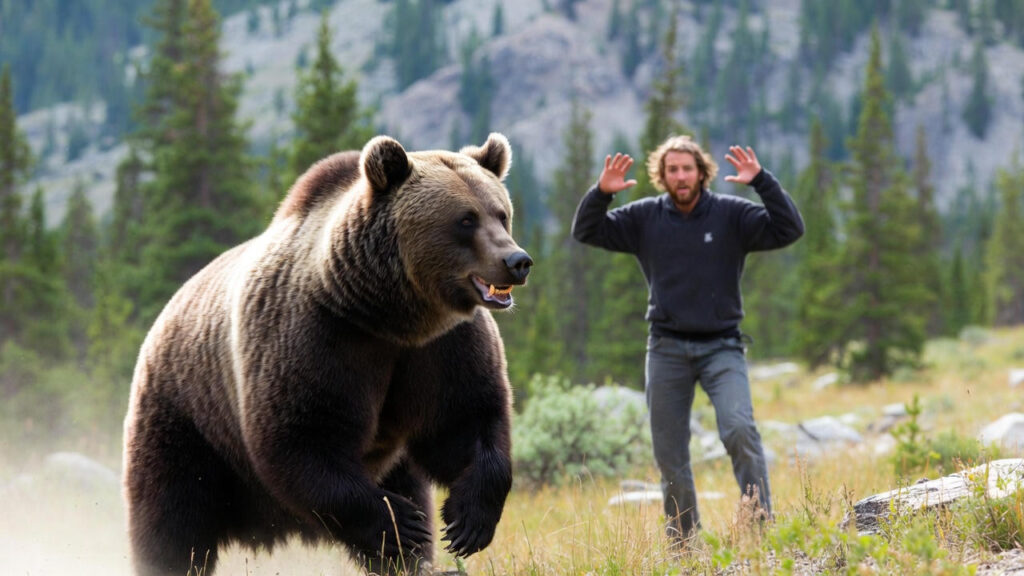
- Don’t run – Triggers chase instinct.
- Speak calmly, wave arms slowly (appear larger).
- Back away sideways – Keep eye contact minimal.
- Detour wide if possible.
Give space – Most bears leave.
Strategy 6: Defensive Black Bear Attack Response
Black bears usually bluff or defend food/cubs.
- Stand ground – Don’t play dead.
- Make yourself big, yell aggressively.
- Use bear spray.
- Fight back with everything (sticks, rocks, fists) – Target face/eyes.
Survivors who fight often escape.
Strategy 7: Defensive Grizzly Attack Response
Grizzlies protect cubs/space – Most dangerous.
- Play dead immediately.
- Lie flat on stomach, hands clasped behind neck.
- Legs spread to prevent rolling.
- Stay still until bear leaves (can take 20 minutes).
Playing dead reduces threat perception – 75% survival rate.
Strategy 8: Predatory Attack (Rare)
Bear stalks silently, attacks at night.
- Fight back aggressively from start.
- Use spray, weapons, target sensitive areas.
- Never play dead – Bear sees you as prey.
Predatory attacks more common with black bears.
Strategy 9: Post-Encounter Actions
- Report attack to authorities.
- Seek medical attention – Even minor wounds infect.
- Clean gear/food storage.
- Reflect on prevention improvements.
Learn and share knowledge.
Additional Safety Tips
- Carry whistle/air horn.
- Know local bear activity.
- Dogs on leash – Can trigger charges.
- Menstruating women: No evidence attracts bears, but store products properly.
Frequently Asked Questions (FAQ)
Q: Run from bear?
A: Never – You can’t outrun one.
Q: Climb tree?
A: Only vs black bear (they climb better).
Q: Play dead vs fight?
A: Play dead for grizzly defensive; fight black bear.
Q: Bear spray vs gun?
A: Spray more effective, less lethal.
Q: Most dangerous bear?
A: Grizzlies statistically, but black bears more encounters.
Final Thoughts
Surviving a bear attack combines preparation, knowledge and calm execution. These 9 powerful strategies help you avoid disaster while enjoying bear country safely.
The vast majority of bears want nothing to do with humans – respect their space, prepare properly and you’ll likely never need these responses.
Stay aware, stay prepared and embrace the wild confidently. Nature’s beauty is worth the vigilance.
Safe adventures! 🐻