Master the art of seafood preparation at home. Discover how to dress a crab with our simple UK guide, featuring easy step-by-step instructions, essential tools, and expert presentation tips.
How to Dress a Crab
Few culinary pleasures compare to the sweet, delicate flavour of fresh British seafood. In the UK, we are blessed with some of the finest brown crabs in the world, particularly along our rugged coastlines from Cornwall to Cromer. However, many home cooks feel intimidated by the prospect of buying a whole crustacean because they do not know what to do with it once it arrives in their kitchen.
The good news is that learning how to dress a crab is a straightforward, satisfying kitchen skill that anyone can master with a bit of patience. Dressing means removing the meat from the shell and presenting it beautifully back inside the main carapace for your guests to enjoy. In this comprehensive seafood guide, we will walk you through exactly how to dress a crab safely and cleanly, ensuring you get every single delicious morsel.
Kitchen Tools You Will Need Before You Start
Preparation is essential when handling seafood. Before you begin learning how to dress a crab, please make sure you gather the following items on your kitchen counter:
- A large, sturdy chopping board: Place a damp cloth underneath your board to prevent it from slipping while you work.
- A heavy chef’s knife or a small hammer: This will be used to crack the thick claws and legs carefully.
- A crab pick or a small skewer: Essential tools for teasing the white meat out of the narrow crevices.
- An old teaspoon: Perfect for scooping out the rich brown meat from the main shell cavity.
8 Steps to Dress a Crab Perfectly
Follow this precise sequence to separate the rich brown meat from the sweet white meat. Taking your time during this process on how to dress a crab will guarantee a spectacular, restaurant-quality finish.
1. Remove the claws and legs:
Place the cooked crab on its back on your chopping board. Hold the main body firmly with one hand, then twist and pull the large claws and smaller legs away from the body. They should snap off relatively easily at the joint. Set them aside for later.
2. Separate the main body from the shell:
Locate the small triangular flap on the underside of the belly, known as the apron, and push it up with your thumb. Insert your fingers into the gap between the body section and the large upper shell, then push upwards firmly to pop the central body section out.
3. Discard the dead man’s fingers:
Look closely at the central body section you just removed. You will see several grey, spongy, finger-like gills radiating outwards. These are colloquially known as dead man’s fingers. They are completely inedible and have an unpleasant texture, so peel them away and throw them in the bin immediately.
4. Scoop out the brown meat:
Take the main upper shell and look inside. Use your teaspoon to carefully scoop out all the rich, soft brown meat into a clean mixing bowl. Give the empty shell a thorough wash in warm, soapy water, dry it completely, and brush the outside with a little vegetable oil to make it look shiny.
5. Extract the white body meat:
Take a sharp knife and cut the central bony body section in half. You will see numerous small bony pockets filled with sweet white meat. Use your pick or skewer to meticulously tease out all of this white meat into a separate bowl, ensuring no fragments of internal shell mix in.
6. Crack the large claws:
Place the claws flat on your board. Wrap them in a clean tea towel to stop pieces of shell from flying across the room, then tap them firmly with the back of your heavy knife or a small hammer until the outer casing fractures.
7. Pick the claw and leg meat:
Carefully peel away the cracked shell pieces from the claws. Pull out the large chunks of white meat, remembering to remove the flat, translucent cartilage found inside the centre of the main claw. Crack the smaller legs and push the remaining white meat out.
8. Dress the shell for presentation:
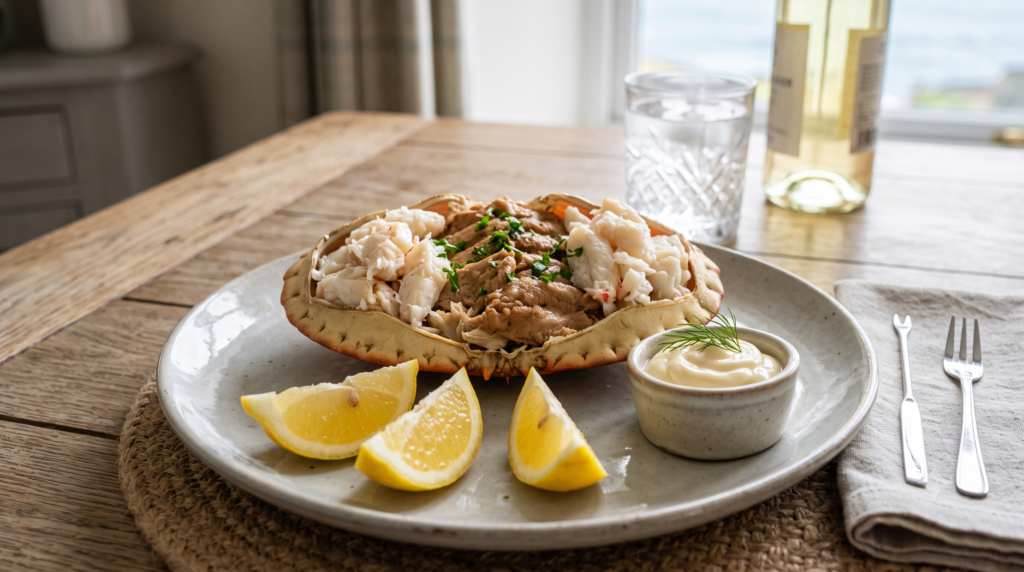
Take your clean, oiled main shell. Spoon the brown meat back into the centre of the shell, then arrange the white meat neatly along both sides to create a striking contrast. Your beautifully prepared seafood dish is now ready to serve alongside fresh lemon wedges and homemade mayonnaise.
Serving Suggestions for Your Masterpiece
Once you successfully execute the process of how to dress a crab, the rewards are genuinely fantastic. Freshly prepared crab requires very little embellishment to taste spectacular.
You can serve your beautifully dressed shell simply alongside a crisp green salad, some hot buttered new potatoes, and a slice of crusty sourdough bread. If you prefer a lighter option, the picked meat is absolutely wonderful tossed through hot linguine pasta with a splash of olive oil, fresh red chilli, garlic, and a squeeze of lemon juice. Now that you understand how to dress a crab, you can confidently skip the expensive pre-packed options at the supermarket and enjoy superior freshness at home.
Common Mistakes to Avoid
When learning how to dress a crab for the first time, a few minor errors can spoil the texture of your dish. Avoid these common pitfalls:
- Leaving shell fragments in the meat: Always run your fingers gently through the picked white meat before serving to check for tiny, sharp pieces of hidden translucent shell.
- Eating the green digestive gland: Only keep the distinct brown paste and the firm white chunks, discard the greenish stomach sac located right behind the crab’s eyes.
- Rushing the claw-cracking stage: Hitting the claws with excessive force will smash the shell into tiny splinters, which makes it nearly impossible to separate the meat cleanly.
If you follow these steps carefully, you will know exactly how to dress a crab whenever you want to treat your family to a luxurious seafood dinner.
Frequently Asked Questions About How to Dress a Crab
How long can I store a dressed crab in the fridge?
Fresh seafood spoils very quickly. Once you complete the process of how to dress a crab, the meat should ideally be consumed immediately. If necessary, you can cover the shell tightly in cling film and store it in the coldest part of your fridge for up to twenty-four hours.
Can I use this exact method for a spider crab?
The steps are broadly similar, but spider crabs have much longer, thinner legs and a smaller main body cavity. When learning how to dress a crab of the spider variety, expect to spend significantly more time picking meat from the legs rather than the main shell.
What is the difference in flavour between white and brown meat?
The white meat found in the claws and legs is incredibly sweet, firm, and delicate. The brown meat found in the main body shell has a much richer, intensely savoury, and slightly nutty flavour, which makes it absolutely perfect for spreading on toast or mixing into rich pasta sauces, ollock, or hake to enjoy perfect results across all your favourite seafood dishes.