Learn how to make ciabatta bread at home. Master high-hydration dough, stretch-and-fold techniques, and get a crisp crust with an open, airy crumb.
How to Make Ciabatta Bread
Is there anything better in this world than the smell of freshly baked bread filling your kitchen? Today, we are tackling one of the absolute best: authentic Italian artisan bread! Learning how to make ciabatta at home is way easier than you might think.
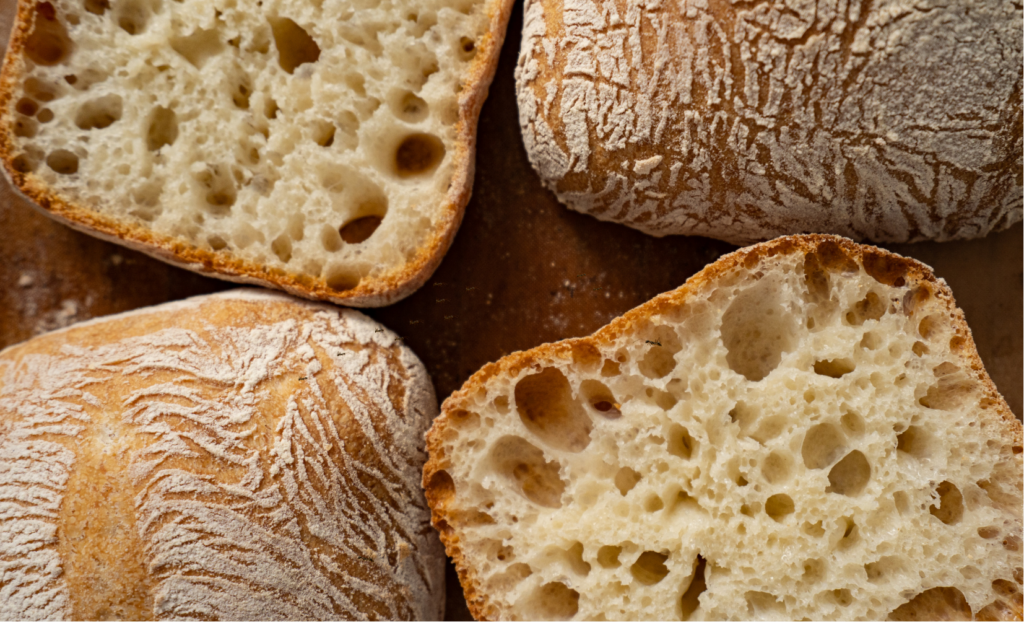
With its golden, crackly crust and those big, beautiful air pockets inside, discovering how to make ciabatta with that rustic texture is a total game-changer. Don’t let high-hydration dough intimidate you; there’s actually zero heavy kneading required! Grab your apron, and let’s bake something amazing together.
1. Grab Your Ingredients!
The best part about baking classic bread is that you probably already have most of this sitting in your pantry right now.
Here’s your shopping list:
- For the Starter (Poolish): 200g strong white bread flour, 200ml lukewarm water, and a tiny pinch (1/8 tsp) of instant yeast.
- For the Dough: Your bubbly starter, 300g strong white bread flour, 220ml lukewarm water, 1 tsp instant yeast, 10g fine salt, and 1 tbsp olive oil.
2. Make the Overnight Starter
Trust me on this one, taking two minutes to mix your starter the night before makes a world of difference! It gives your bread that incredible bakery-style flavour.
Here is how you kick it off:
- Mix it up: In a bowl, stir together 200g flour, 200ml warm water, and 1/8 tsp yeast until it forms a smooth paste.
- Let it sleep: Cover the bowl loosely with plastic wrap and leave it on your counter for 12 to 16 hours. By morning, it’ll be super bubbly and smell fantastic!
3. Mix & Fold Your Dough
Because ciabatta dough is extra wet, we don’t mess around with messy counter kneading. Instead, we do quick “stretch-and-folds” right in the bowl! Mastering this simple technique is the secret to how to make ciabatta without getting sticky dough all over your kitchen.
Here is the secret to building great texture:
- Bring it together: Add the rest of your water (220ml), flour (300g), yeast (1 tsp), salt (10g), and olive oil to your bubbly starter. Give it a good mix with a spatula for 3 to 5 minutes until you have a sticky, shaggy dough.
- First fold: Cover and rest for 30 minutes. Wet your hands, reach under one side of the dough, stretch it gently upward, and fold it over the top. Turn the bowl a quarter turn and repeat on all four sides.
- Repeat 3 times: Do this folding trick 3 more times, resting 30 minutes in between each set. By the end, your dough will transform into a smooth, glossy, super-elastic cloud!
4. Shape, Rise, and Bake!
Now for the fun part! Be nice and gentle with your dough here so we don’t pop all those lovely gas bubbles inside.
Let’s bring these loaves to life:
- Flour your counter well: Don’t be shy with the flour! Dust your work surface generously, gently tip out the dough, and sprinkle a little more flour on top.
- Cut into shape: Use a dough scraper to cut the dough right down the middle into 2 rectangular loaves. Tuck the sides under slightly using floured hands.
- Final rest: Let your loaves puff up on baking parchment or a tea towel for about 45 minutes until light and airy.
- Bake with steam: Crank your oven to 230°C (210°C Fan / Gas Mark 8). Pop a shallow pan on the bottom rack to warm up. Slide your loaves in on a hot tray, pour a cup of hot water into that bottom pan for steam, and shut the door fast!
- Golden perfection: Bake for 20 to 25 minutes until your loaves are deep golden brown and sound hollow when you tap the bottom.
FAQs About How to Make Ciabatta Bread
Got questions? You are definitely not alone! Here are a few things home bakers always ask when practising how to make ciabatta:
1. Why is my dough so wet and sticky?
Don’t panic, that’s completely normal! Ciabatta needs a wet dough to get those signature big air bubbles. Resist the urge to dump in extra flour while mixing; the periodic folding will build all the strength you need.
2. How do I get those huge air pockets?
It’s all about gentle handling! After your dough rises, treat it like a delicate feather. The less you squash it during shaping, the bigger those air pockets will be.
3. Can beginners learn how to make ciabatta on their first try?
Absolutely! As long as you follow the stretch-and-fold schedule and handle the dough gently during shaping, you’ll get fantastic results even on your very first attempt.
Wrapping Up!
Now that you know how to make ciabatta like a pro, you can skip the store-bought loaves entirely! You can enjoy it fresh out of the oven, dipped in olive oil, toasted for paninis, or served alongside a big bowl of warm pasta. Happy baking, friend!