Flat battery? Discover how to jump-start a car safely with our step-by-step UK guide. Learn the correct cable connections, safety rules, and expert tips to get your vehicle back on the road.
How to Jump-Start a Car
There are few feelings more frustrating than turning your car key or pressing the start button only to hear a faint clicking sound. A flat battery can ruin your morning schedule, but the good news is that learning how to jump-start a car is a straightforward skill that every motorist can master.
Before you call out a roadside recovery service, you can often get back on the road yourself if you have a set of jump leads and a helpful fellow motorist with a working vehicle. In this comprehensive guide, we will walk you through how to jump-start a car safely and efficiently, ensuring you protect both vehicles from electrical damage.
Prerequisite Checks Before You Begin
Safety must always come first when dealing with vehicle electrical systems. Before attempting to discover how to jump-start a car, please ensure you check the following items:
- Check the batteries: Both vehicles must have batteries with the same voltage, which is standardly 12V for regular UK passenger cars.
- Inspect for damage: If the dead battery is cracked, leaking, or visibly swollen, do not attempt to jump-start it. Call a professional instead.
- Remove jewellery: Take off any metal rings, watches, or bracelets to prevent accidental electrical shocks or sparks.
8 Steps to Jump-Start a Car Safely
Follow this precise sequence to transfer power from the donor vehicle to the stranded car. Make sure the cables do not touch each other once connected to a power source.
1. Position the vehicles:
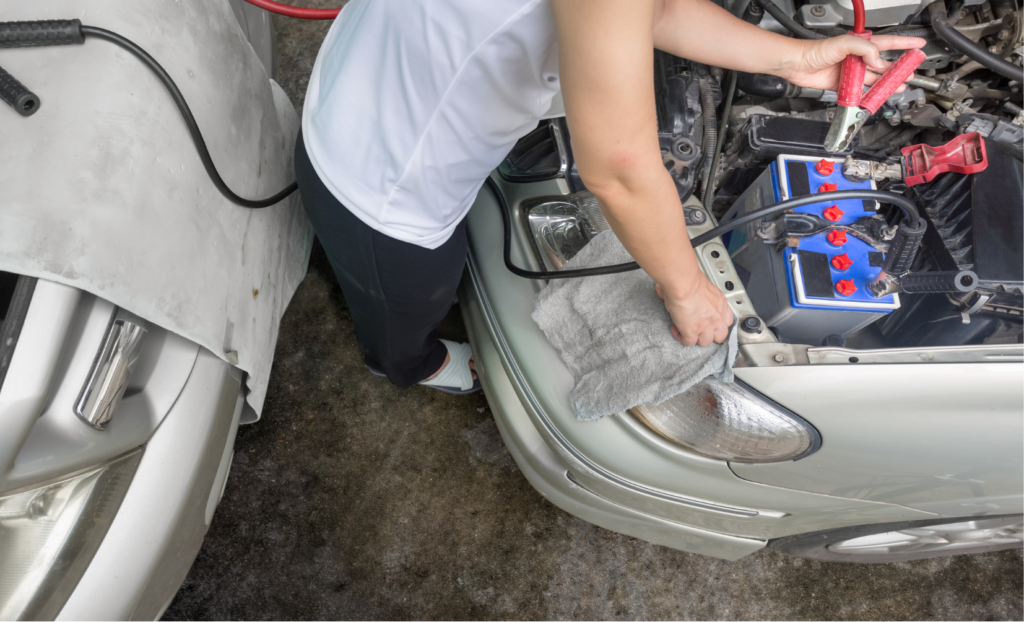
Park the working car close to the stranded car so the jump leads can easily reach from one battery to the other. Ensure the vehicles are not touching each other. Turn off the ignition of both cars, engage the handbrakes, and select neutral or park.
2. Connect the first red cable:
Take the red positive jump lead. Connect one end of it to the positive terminal of the flat battery. This terminal is usually marked with a plus sign (+) or covered by a red plastic lid.
3. Connect the other red cable:
Take the opposite end of the same red positive lead and securely attach it to the positive terminal (+) of the fully charged donor battery.
4. Connect the first black cable:
Take the black negative jump lead. Connect one end of this cable to the negative terminal of the donor battery. This terminal is usually marked with a minus sign (-).
5. Attach the final black cable:
Connect the remaining end of the black negative lead to an unpainted metal surface on the engine block or chassis of the stranded car, well away from the battery and fuel system. Do not connect it to the negative terminal of the dead battery.
6. Start the donor engine:
Start the engine of the donor car and let it run at a fast idle for roughly three to five minutes. This allows a steady flow of electrical current to start reviving the flat battery.
7. Start the stranded vehicle:
Attempt to start the engine of the stranded vehicle. If it does not start within ten seconds, turn off the ignition, wait a minute, and try again. Once the car starts, leave both engines running for five minutes to stabilise.
8. Disconnect the cables in reverse:
Remove the jump leads in the exact reverse order that you attached them. Disconnect the black negative cable from the revived car first, then from the donor car. Next, remove the red positive cable from the donor car, and finally from the revived car.
What to Do After Your Vehicle Starts
Once you successfully execute the process of how to jump-start a car, your job is not quite finished. The alternator now needs time to replenish the battery reserve.
You must keep the revived vehicle running and take it for a drive immediately. A continuous drive of at least thirty minutes, ideally on a dual carriageway or motorway rather than in stop-start city traffic, is required to give the battery a substantial charge. If you turn the engine off too soon, you will likely find yourself needing to figure out how to jump-start a car all over again.
Common Mistakes to Avoid
When learning how to jump-start a car, small errors can lead to blown fuses or damaged engine control units. Avoid these pitfalls:
- Letting cable clamps touch: Never allow the red and black clamps to touch one another while they are connected to a live battery.
- Connecting to the wrong terminal: Double-check the plus and minus markings because mixing them up can reverse the polarity and destroy your alternator.
- Ignoring safety gear: If you have safety goggles or thick gloves in your boot, always wear them during this procedure.
If you follow these steps carefully, you will know exactly how to jump-start a car whenever a flat battery catches you off guard.
FAQ’s About How to Jump-Start a Car
Can you jump-start a modern car with a hybrid engine?
You should exercise extreme caution here. While you can sometimes use a standard petrol or diesel car to help a hybrid, you must never use a hybrid vehicle as the donor car. Their delicate high-voltage systems can easily suffer severe electrical damage.
Why shouldn’t I connect the negative cable to the flat battery terminal?
Connecting the final negative clamp directly to the dead battery can create a spark close to the battery casing. Because lead-acid batteries can release flammable hydrogen gas, this spark presents a minor risk of causing an explosion. Connecting to the engine block keeps the spark safely away.
What should I do if the car refuses to start after jumping?
If you have followed all instructions on how to jump-start a car and the engine still will not turn over, the battery might be completely degraded and incapable of holding any charge. Alternatively, the issue could lie with a faulty starter motor or a failed alternator rather than the battery itself.