Learn how to make traditional British scones with this easy recipe. Get step-by-step tips for tall, light, flaky scones perfect for a cream tea.
How to Make Traditional British Scones
Nothing quite captures the charm of afternoon tea like freshly baked, warm, golden treats, and learning how to make traditional British scones is far simpler than most bakers think. The secret to a truly authentic British scone lies in achieving a light, tall rise with a tender, flaky crumb that easily splits in half without crumbling into pieces.
Unlike American scones, which tend to be heavier, denser, and loaded with sugar or glaze, traditional British scones are lightly sweetened, rely on minimal ingredients, and serve as the perfect vessel for rich clotted cream and strawberry jam. Here is your fail-safe step-by-step recipe to baking perfect scones every single time.
1. Gather Your Simple Ingredients
A classic scone relies on everyday pantry staples. Using cold dairy ingredients is the ultimate secret to creating steam pockets that give your bake its signature rise.
Gather these ingredients before starting how to make traditional British scones:
- 350g Self-Raising Flour: Plus extra for dusting your work surface.
- 1 tsp Baking Powder: Gives an extra lifting boost for maximum height.
- 85g Unsalted Butter: Cold and cut into small cubes.
- 3 tbsp Caster Sugar: Adds subtle sweetness without overwhelming the palate.
- 175ml Whole Milk: Gently warmed (or mixed with 1 tsp lemon juice to create quick buttermilk).
- 1 tsp Vanilla Extract: Optional, for a subtle aroma.
- 1 Egg: Beaten, used purely for brushing the tops before baking.
2. Rub the Butter and Flour to Fine Breadcrumbs
Rubbing cold butter into dry ingredients creates tiny fat-coated flour particles that prevent excess gluten from developing, guaranteeing a soft crumb.
Follow these steps for the perfect base:
- Sift dry ingredients: Sift 350g self-raising flour and 1 tsp baking powder into a large bowl, then stir in 3 tbsp caster sugar.
- Rub in the butter: Add the cold, cubed butter. Use your fingertips to rub the butter into the flour quickly until the mixture resembles fine breadcrumbs.
- Warm the milk: Warm 175ml milk in the microwave for 20 seconds until lukewarm (stir in vanilla extract if using).
3. Combine and Form the Dough Gently
Overworking scone dough makes it tough and chewy instead of light and airy. Handle the mixture as little as possible when learning how to make traditional British scones.
Mix and shape your dough with these steps:
- Add liquid: Make a well in the centre of your flour mixture and pour in the warm milk.
- Combine with a table knife: Use a flat cutlery knife to quickly draw the mixture together into a soft, slightly sticky dough.
- Bring together by hand: Turn the dough onto a lightly floured surface and gently fold it over 2–3 times just until smooth. Do not knead.
4. Stamp Out the Scones Without Twisting
How you cut your scones directly impacts how high and straight they rise in the oven.
Master the cutting technique using these tips:
- Pat to 3cm thickness: Gently press the dough down with your hands to a thick 3cm (1.2 inch) depth, never roll it out too thin with a rolling pin.
- Use a smooth cutter: Dust a 5cm or 6cm fluted cutter with flour.
- Press straight down: Press the cutter straight down into the dough and pull it straight up. Never twist the cutter, as twisting seals the edges and prevents a straight vertical rise.
5. Bake to Golden Perfection
Baking at a high oven temperature creates a rapid burst of steam that lifts the dough instantly.
Bake your batch using these steps:
- Preheat oven: Heat your oven to 220°C (200°C Fan / Gas Mark 7) and line a baking sheet with baking paper.
- Arrange and glaze: Place the scones close together on the tray. Brush the tops gently with beaten egg (avoid letting glaze drip down the sides, which can glue the rise).
- Bake for 10–12 minutes: Bake until tall, well-risen, and golden brown on top. Transfer to a wire rack to cool slightly.
Frequently Asked Questions
Here are everyday questions bakers ask about making British scones.
1. What goes on first: clotted cream or jam?
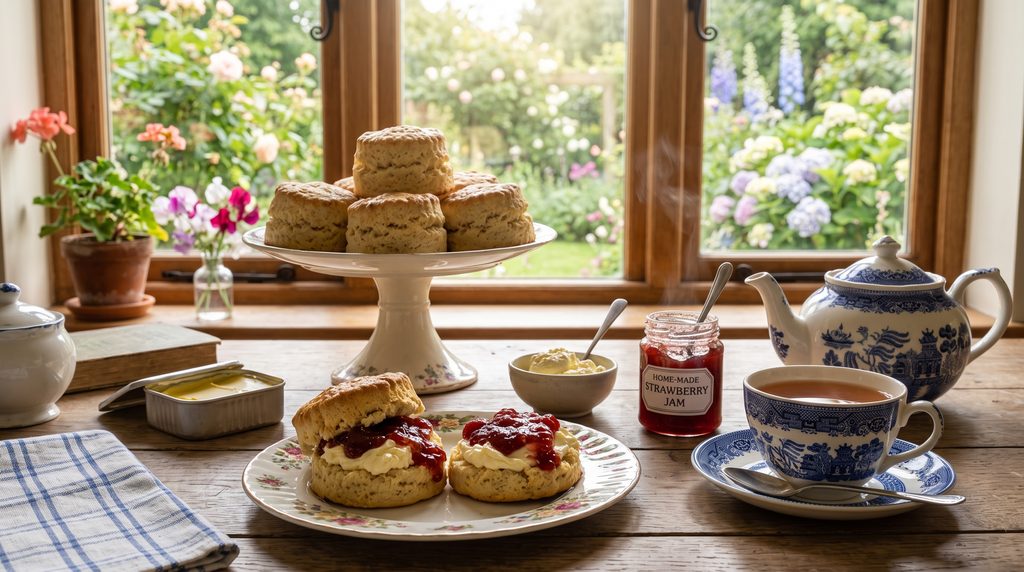
This depends on where you are in the UK! The Cornish method spreads jam first, topped with a dollop of clotted cream. The Devonshire method spreads clotted cream first, topped with jam. Both methods are delicious!
2. Why didn’t my scones rise very high?
Scones usually fail to rise if the dough was rolled out too thin initially, if the butter was too warm, if the baking powder was expired, or if the cutter was twisted when stamping out the shapes.
3. Can I freeze unbaked scones?
Yes! Stamp out your scones and freeze them flat on a baking tray. Once solid, transfer them to a freezer bag. Bake directly from frozen, adding 2–3 extra minutes to the total baking time.
Final Thoughts
Knowing how to make traditional British scones brings the authentic taste of a British tearoom right into your kitchen. Serve them warm from the oven, split in half, layered with thick clotted cream and sweet strawberry jam, alongside a fresh pot of English Breakfast tea.